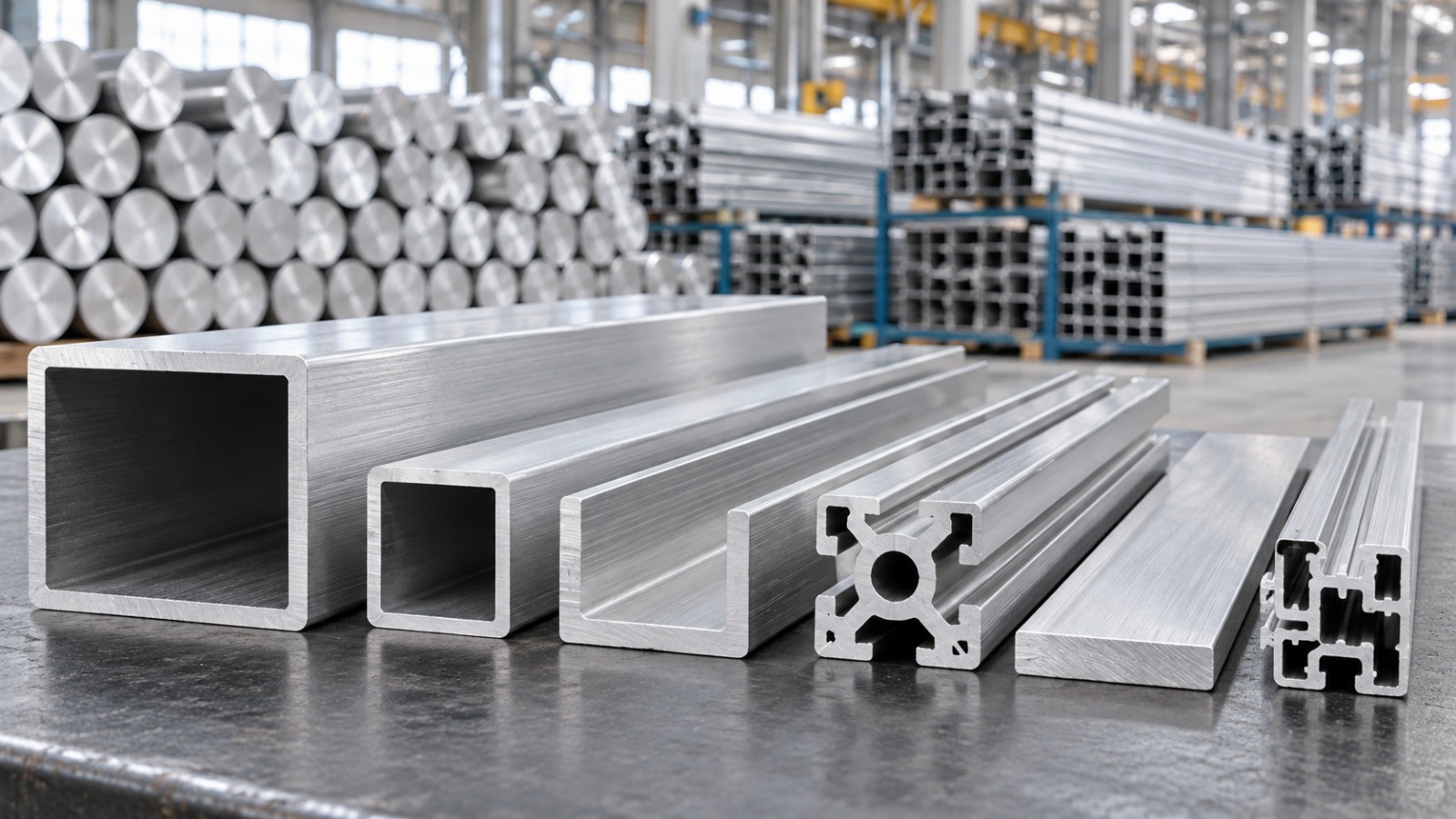
If you are planning to source aluminium profiles, one of your first questions will probably be, “How much will it cost?” The truth is, aluminium extrusion cost is not based on a single fixed rate. Two profiles that look similar can have different prices depending on the alloy, weight, design complexity, tooling, order quantity, finishing, and fabrication requirements. Understanding these factors makes it easier to evaluate quotations and choose the right solution for your project. This is also why aluminium extrusion cost per kg should not be considered in isolation when comparing quotations.
For buyers, knowing how aluminium extrusion pricing works is especially useful when comparing suppliers. The lowest initial quote may not always mean the lowest overall manufacturing cost.
What Determines Aluminium Extrusion Cost?
Several elements come together to determine the final price of an extruded profile. Industry sources identify raw material, tooling, processing, finishing, secondary operations, and logistics among the major cost components.
Here are the most important factors affecting aluminium extrusion cost:
|
Cost Factor |
How It Affects Pricing |
|
Raw aluminium and alloy |
Influences the base material cost |
|
Profile size and weight |
More material generally increases cost |
|
Design complexity |
Complex profiles may require more demanding tooling and production |
|
Die and tooling |
Custom profiles may require dedicated dies |
|
Order volume |
Larger runs can spread fixed costs across more units |
|
Tolerances |
Tighter requirements may require greater process control |
|
Finishing and fabrication |
Anodizing, coating and machining add processing steps |
|
Packaging and logistics |
Influences the final delivered cost |
-
Raw Material and Alloy Selection
Raw aluminium is usually one of the largest contributors to aluminium extrusion manufacturing cost.
One IMARC cost model estimates raw material as approximately 55–65% of aluminium extrusion manufacturing costs, although the actual proportion can vary significantly depending on the manufacturer, product mix, market conditions and production model
Source - https://www.imarcgroup.com/insight/aluminum-extrusion-cost-model
The selected alloy also matters. Different alloys have different material properties and extrusion characteristics, so the right choice should be based on the application's actual requirements rather than price alone.
-
Profile Design, Weight and Complexity
A heavier profile requires more aluminium per metre, which directly affects material consumption. Geometry matters too.
Hollow sections, very thin walls, intricate shapes and demanding tolerances can make extrusion more challenging. The Aluminium Extruders Council identifies profile complexity, tolerance requirements and alloy selection among factors that can influence extrusion die tooling costs.
This is why good design can help control custom aluminium extrusion costs. Working with an experienced manufacturer during the design stage may reveal opportunities to simplify a profile or use material more efficiently.
-
Tooling and Die Requirements
A custom profile normally requires a die specifically designed for its cross-section. This creates an initial tooling expense.
However, tooling should not be viewed only as an additional cost. The Aluminium Extruders Council notes that while custom extrusions generally cost more than catalogue profiles because of tooling and production quantities, designing required features directly into an extrusion can sometimes make the resulting component less expensive than machining a standard profile.
Source - https://aec.org/faqs
-
Production Volume
Quantity can significantly influence unit pricing. Setting up the extrusion process involves costs that need to be distributed across the production run. With larger orders, those fixed costs can be spread over more profiles.
For buyers working with a bulk aluminium extrusion supplier, discussing expected annual volumes and repeat orders can therefore be useful when requesting quotations.
-
Finishing and Secondary Operations
A mill-finish extrusion will have a different cost structure from a component requiring anodising, powder coating, cutting, drilling, punching or CNC machining.
Every additional operation adds processing, equipment, labour and quality-control requirements. Official industry pricing analysis also identifies surface finishing and value-added operations such as painting, punching and cutting as variable components of extrusion pricing.
Before comparing quotes from an aluminium extrusion manufacturer, check exactly which processes are included.
- How Much Does Aluminium Extrusion Cost Per Kg?
Buyers often compare suppliers based on aluminium extrusion cost per kg, but there is no single rate for every profile. The final price depends not only on aluminium weight, but also on alloy, profile complexity, tooling, order volume and tolerances.
Even two profiles of the same weight can have different costs per kg if one requires more complex production, tighter tolerances or additional processing. Finishing, machining, packaging and delivery can further affect the quotation.
Therefore, cost per kg is useful for comparison, but buyers should also check what is included in the quoted rate.
How Can Buyers Get More Accurate Pricing?
Along with asking for the aluminium extrusion cost per kg, provide your supplier with complete project information, including:
- Profile drawings and dimensions
- Required aluminium alloy
- Tolerances and performance requirements
- Estimated order quantity
- Required surface finish
- Machining or fabrication needs
- Packaging and delivery requirements
This helps a custom aluminium extrusion manufacturer prepare a quotation based on the actual component rather than assumptions.
Why Choose INEX for Aluminium Extrusion?
INEX combines multiple stages of aluminium manufacturing under one setup, helping customers move from design to finished profiles efficiently. Its manufacturing process includes an in-house Hot Top Casting Foundry, PLC-controlled extrusion, precision fabrication, and surface-finishing capabilities.
INEX also provides aluminium solutions for diverse industrial applications, supporting requirements across multiple sectors.
What strengthens INEX as a manufacturing partner:
- 3,600 MT annual production capacity to support diverse production requirements
- In-house Hot Top Casting Foundry for greater control over billet quality
- PLC-controlled extrusion presses for consistent and controlled production
- Profiles up to 125 mm in diameter for varied industrial applications
- Wall thicknesses as low as 0.35 mm for precision profile requirements
- In-house fabrication and finishing capabilities for value-added solutions
- ISO 9001:2015 certified with a focus on quality-controlled manufacturing
- Trusted global aluminium extrusion supplier, serving customers across India and international markets.
Conclusion
There is no universal aluminium extrusion cost that applies to every project. Even the aluminium extrusion cost per kg can vary depending on material choice, profile weight, complexity, tooling, production quantity, tolerances, finishing and fabrication.
Understanding these factors helps you compare suppliers on more than price alone and identify where design or production decisions can improve overall value.
Looking for custom or bulk aluminium profiles? Share your project requirements with INEX to discuss the right extrusion solution for your application.
Frequently Asked Questions (FAQ)
1. What are the main factors affecting aluminium extrusion cost?
The main factors include raw aluminium prices, alloy selection, profile size and weight, design complexity, die requirements, production volume, tolerances, surface finishing, secondary operations, packaging, and logistics.
2. How does aluminium alloy selection affect extrusion pricing?
Different aluminium alloys have different material costs and extrusion characteristics. The alloy required for a particular strength, corrosion resistance, finish, or application can therefore influence overall aluminium extrusion pricing.
3. Does profile design affect custom aluminium extrusion cost?
Yes. Profile weight, wall thickness, hollow sections, intricate geometry, and dimensional requirements can influence tooling and production, which can affect custom aluminium extrusion cost.
4. Why does order quantity affect aluminium extrusion pricing?
Extrusion involves setup and other fixed production costs. With larger production runs, these costs can be distributed across more profiles, which may reduce the cost per unit.
5. How does tooling affect aluminium extrusion cost?
Custom aluminium profiles generally require dedicated extrusion dies. The complexity and type of die required can add an initial tooling cost to the project.
6. Do anodizing and powder coating increase extrusion costs?
Yes. Anodizing, powder coating, painting, and other surface treatments require additional processing. Their cost can vary depending on the finish, profile dimensions, quantity, and project specifications.
7. Can aluminium extrusion design help reduce manufacturing costs?
Yes. An efficient profile design can optimize material use, simplify production, reduce unnecessary secondary machining, and sometimes combine multiple functions into a single extruded component.
8. What information should I provide to get an aluminium extrusion quote?
Provide profile drawings and dimensions, alloy requirements, tolerances, estimated quantities, surface finish, fabrication or machining requirements, packaging specifications, and delivery details. Complete information helps manufacturers prepare a more accurate quotation.
9. What should buyers compare when choosing an aluminium extrusion manufacturer?
Buyers should look beyond the quoted price and compare manufacturing capabilities, quality control, customization, tolerances, production capacity, finishing and fabrication options, delivery reliability, and experience with similar applications.
